Distance Between Two Shores
By D.K. Chan Rui for Marina Bay Guide
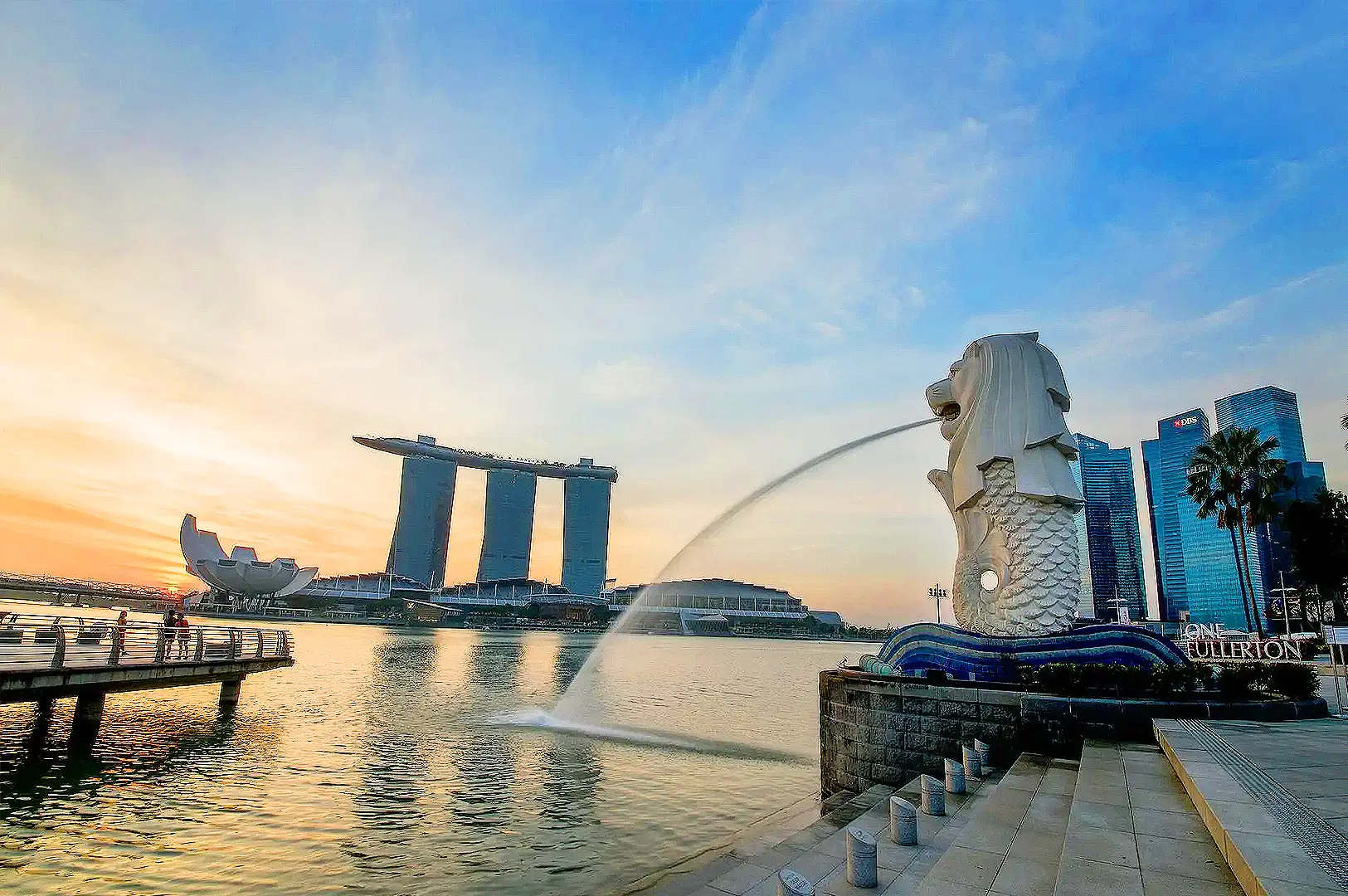
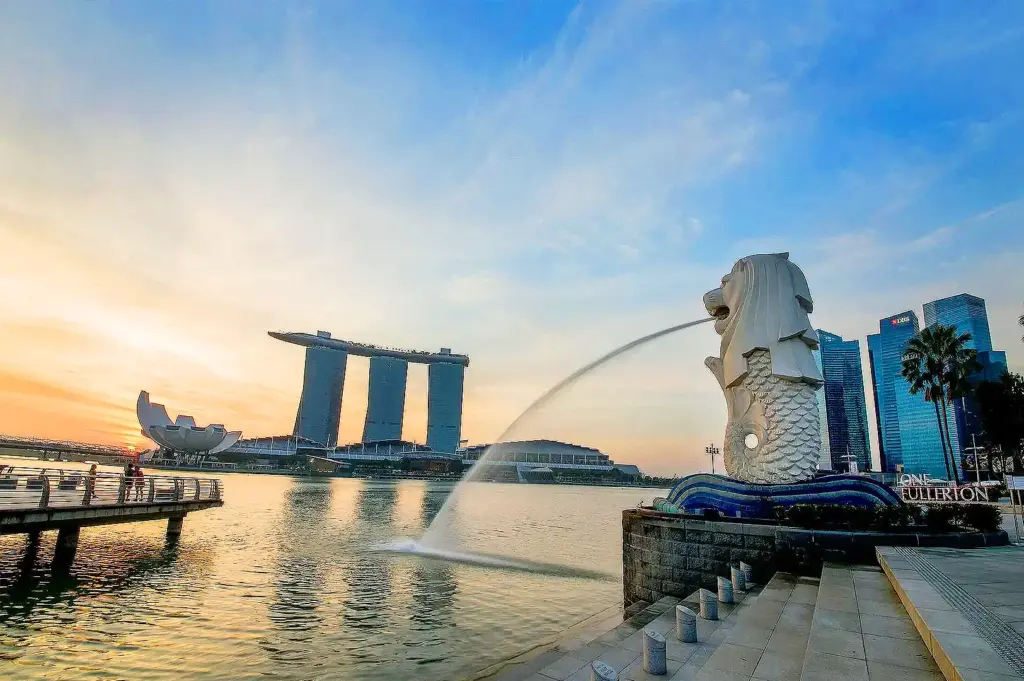
Water spills continuously from the Merlion's mouth, breaking into a pale disturbance where it meets the bay.
A few steps behind the statue, people gather along the railing with their phones raised. Someone waits for a clear photograph. A child leans forward to watch the falling water, while an adult gently draws them back.
The morning is already warm. Across Marina Bay, sunlight catches the glass towers and leaves a broken trail of brightness on the water.
I turn towards Jubilee Bridge, leaving the small crowd behind.
The city looks different when it is no longer being observed from a single place.
The bridge curves gently towards the Esplanade, giving the waterfront room to unfold. Behind me, the Merlion becomes smaller against the Fullerton Hotel. Ahead, the rounded forms of the Esplanade's roof rise above the promenade.
For a moment, both belong to the same view.
The movement across Jubilee Bridge is unhurried. Some people stop near the railing, while others pass with the steady pace of those travelling somewhere familiar.
Below, the water moves against the embankment, its surface disturbed by the occasional passing boat.
The view changes almost imperceptibly with each step.
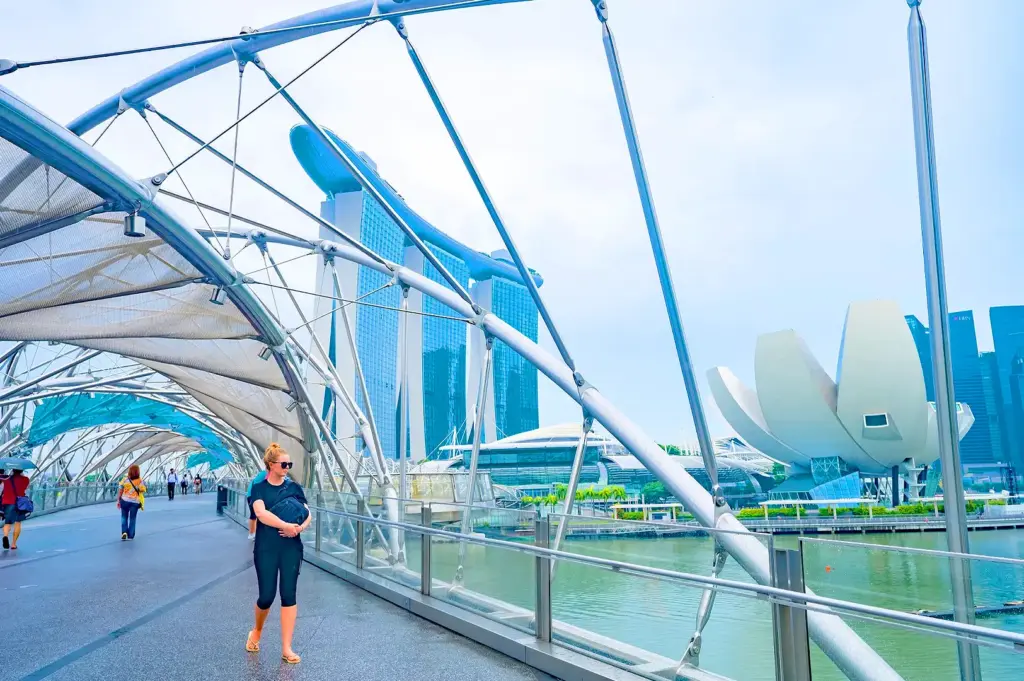
Buildings that appeared closely gathered from Merlion Park begin to separate. Marina Bay Sands shifts towards the centre of the horizon, while the financial district gradually moves behind me.
On the Esplanade side, the waterfront widens.
The nearby dining rooms offer another way to experience this stretch of the waterfront, with Marina Bay Guide exploring the different tables and settings along the bay.
There are benches, stretches of open paving and places where the shade reaches the pedestrian path. The outdoor theatre sits beside the bay, its tiered seating facing the water.
A jogger passes, followed shortly by another. Their footsteps settle into the surrounding sounds of conversation, traffic and movement along the promenade.
Nothing demands that I stop, although there is little reason to hurry.
Walking beside the bay makes the distance feel less important than the changes within it.
Further along, the waterfront becomes more exposed. The shade falls away, and the heat rising from the pavement is noticeable.
A breeze occasionally moves across the water, offering some relief before disappearing again.
The Singapore Flyer rises beyond the surrounding structures. Its circular outline remains visible even as other buildings shift position along the route.
Near the promenade, people pause to look across the bay. Some lean against the railing, while others continue towards the Helix Bridge.
The bridge announces itself gradually through its overlapping steel curves.
From a distance, the structure appears tightly woven. Closer to it, the separate members become clearer, crossing above and beside the pedestrian walkway.
Stepping onto the bridge changes the experience of the skyline.
The steel framework interrupts the view, dividing the surrounding buildings into smaller compositions. Through one opening, Marina Bay Sands appears between two structural members. Through another, the water fills almost the entire space.
The bridge's viewing platforms extend towards the bay, allowing a brief separation from the movement of people crossing.
I stop at one of them.
Below, the water appears darker than it did near Merlion Park. The buildings remain familiar, yet their arrangement has changed enough to make the starting point feel distant.
There is a quiet pleasure in recognising somewhere from an unfamiliar angle.
On the Bayfront side, the ArtScience Museum comes into view. Its pale, curved structure stands beside the water, contrasting with the straight lines of the hotel towers behind it.
The paths around the museum carry a different rhythm.
Visitors move between the waterfront and nearby buildings. Some pause beneath the available shade. Others gather near the railings, looking back towards the bridge.
Here, the architecture feels closer and more imposing than it did across the bay.
Continuing towards Gardens by the Bay, the path passes beneath the elevated roadway. Traffic can be heard overhead, while the open views briefly give way to concrete supports and shadow.
It is one of the less celebrated moments of the walk.
Yet I find the transition revealing.
The waterfront is not one uninterrupted landscape of gardens and carefully framed buildings. There are service roads, supporting structures and practical connections between the spaces people come to enjoy.
They belong to the city just as much as its more recognisable architecture.
Beyond the roadway, the surroundings begin to change again.
The waterfront opens towards Bay South Garden, where planted edges gradually soften the harder lines of Bayfront.
The two conservatories appear ahead, their curved glass surfaces sitting lower against the sky than the towers behind them.
Trees and planted areas begin to occupy more of the view. The sounds of footsteps and conversation remain, but the surrounding greenery gives them a different setting.
Along the water, the skyline that dominated the earlier walk now seems to belong somewhere behind me.
There is no sudden boundary between the city and the gardens. The transition happens through smaller changes: more shade, different surfaces beneath the feet and a growing distance from the glass façades.
The water remains beside the path, connecting these otherwise distinct places.
Near the gardens, I look back across the bay.
The Merlion is no longer distinguishable from this distance. The bridges and buildings have settled into a broader outline, their individual details absorbed by the skyline.
Ahead, the garden paths continue beneath the trees.
A narrow shadow falls across the pavement, moving slightly as the leaves stir above it.
For the first time since leaving Merlion Park, the water is no longer the first thing I notice.