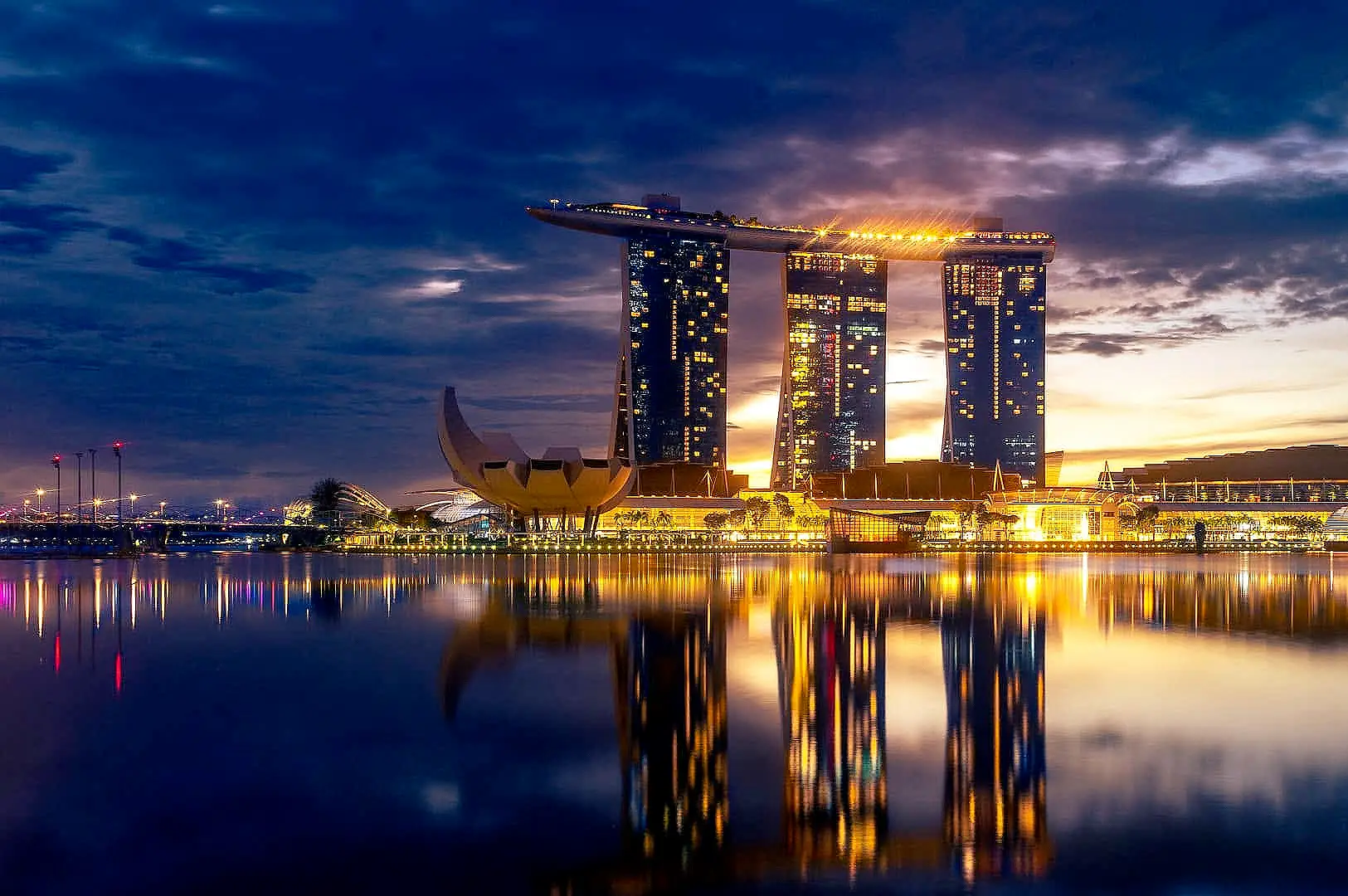
Marina Bay at Blue Hour: When the Skyline Begins to Reflect
By D.K. Chan Rui for Marina Bay Guide
The first lights appear in the windows across Marina Bay while the sky is still bright enough to reveal the buildings' outlines.
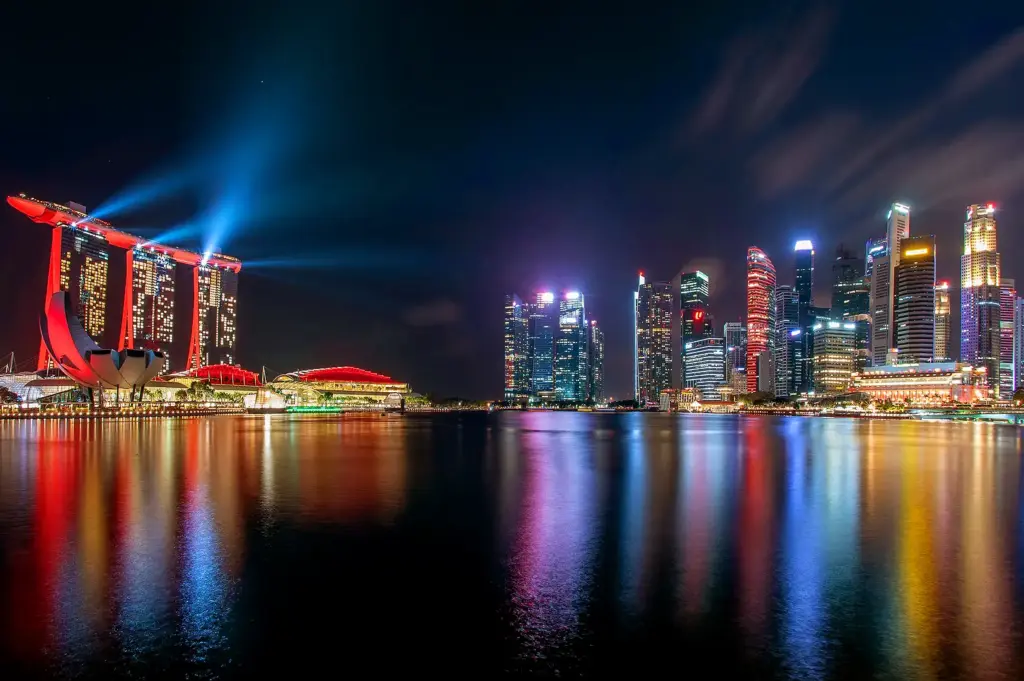
From the Esplanade waterfront, the financial district stands against a fading blue sky. Some towers glow from within. Others remain dark, their glass façades reflecting the last daylight.
Below, the water carries these changes in broken vertical lines.
This is blue hour, the period of twilight when the sun has dropped below the horizon but daylight remains.
What interests me is not simply the colour. It is how familiar buildings begin to reveal themselves differently.
During the afternoon, sunlight separates Marina Bay's architecture. Glass reflects the sky, pale surfaces catch the brightness, and shadows define the spaces between structures.
As daylight weakens, those distinctions soften.
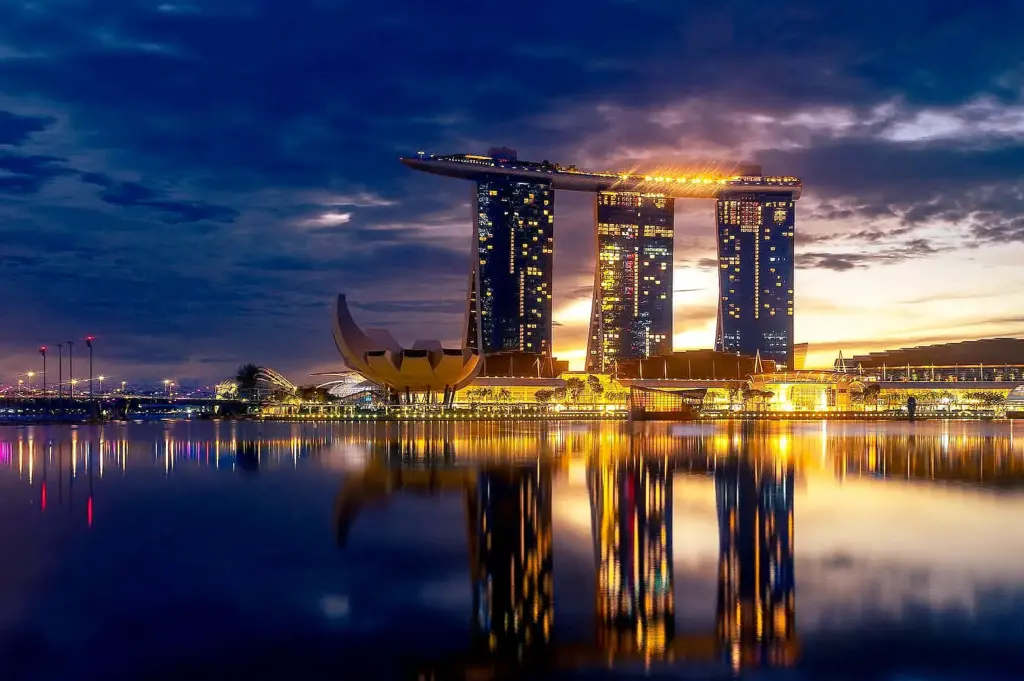
Darker façades merge into larger shapes. Windows become more noticeable. Across the water, Marina Bay Sands retains its familiar silhouette, although smaller details gradually disappear.
The view changes again from the hotel rooms overlooking the bay, where height and position alter what remains visible after sunset. Marina Bay Guide considers these different outlooks in its selection of places to stay around the waterfront.
The city begins exchanging its daytime appearance for one defined by illumination.
Along the promenade, people continue moving. A jogger passes the railing. Someone pauses with a phone raised towards the skyline. Two figures briefly obscure the buildings before moving beyond the frame.
Their presence changes the scale of the view.
Sometimes the most revealing part of a skyline photograph is what moves in front of it.
The water offers another kind of movement.
On calmer evenings, reflections stretch from illuminated buildings towards the centre of the bay. A passing boat interrupts them, scattering the light into smaller fragments.
There is no guarantee of a clear blue sky.
Singapore's cloud cover can make twilight appear muted or grey. After rain, wet pavement introduces reflections closer to the observer.
I find these imperfect conditions worth noticing.
A shallow puddle may hold an inverted fragment of the skyline. A railing becomes a dark line against brighter water. Clouds retain traces of daylight while the buildings beneath them grow darker.
The remaining light often gathers in places we overlook.
Changing position reveals differences that waiting alone cannot.
From the Esplanade, Marina Bay Sands occupies the opposite shore. Closer to Jubilee Bridge, the financial district comes into a different relationship with the waterfront.
Buildings previously hidden become visible. Reflections shift across the view. The spaces between towers begin to matter.
Photography encourages this attention, although a camera is hardly necessary.
As twilight deepens, artificial illumination becomes more prominent.
Promenade lights appear against the pavement. Windows form scattered patterns across the towers. The water begins reflecting individual sources of brightness rather than the general colour of the sky.
During blue hour, natural and artificial light briefly share the scene. Later, illuminated buildings dominate while darker stretches of waterfront recede.
Neither moment reveals everything.
Near the railing, a ripple bends a narrow reflection. The towers above remain still, but their images continue shifting long after the blue has left the sky.