When the Rain Changes Marina Bay
By D.K. Chan Rui for Marina Bay Guide
The first drops settle on the glass railing outside the ArtScience Museum, leaving small circles that briefly hold the grey afternoon sky.
Across Marina Bay, the financial district has begun to disappear behind a curtain of rain. Its taller buildings remain visible, though their edges have softened. The water below turns a muted silver, disturbed by countless small ripples.
A few people hurry towards shelter. Others remain beneath the covered walkways, watching the weather move across the bay.
Rain changes more than the colour of the waterfront.
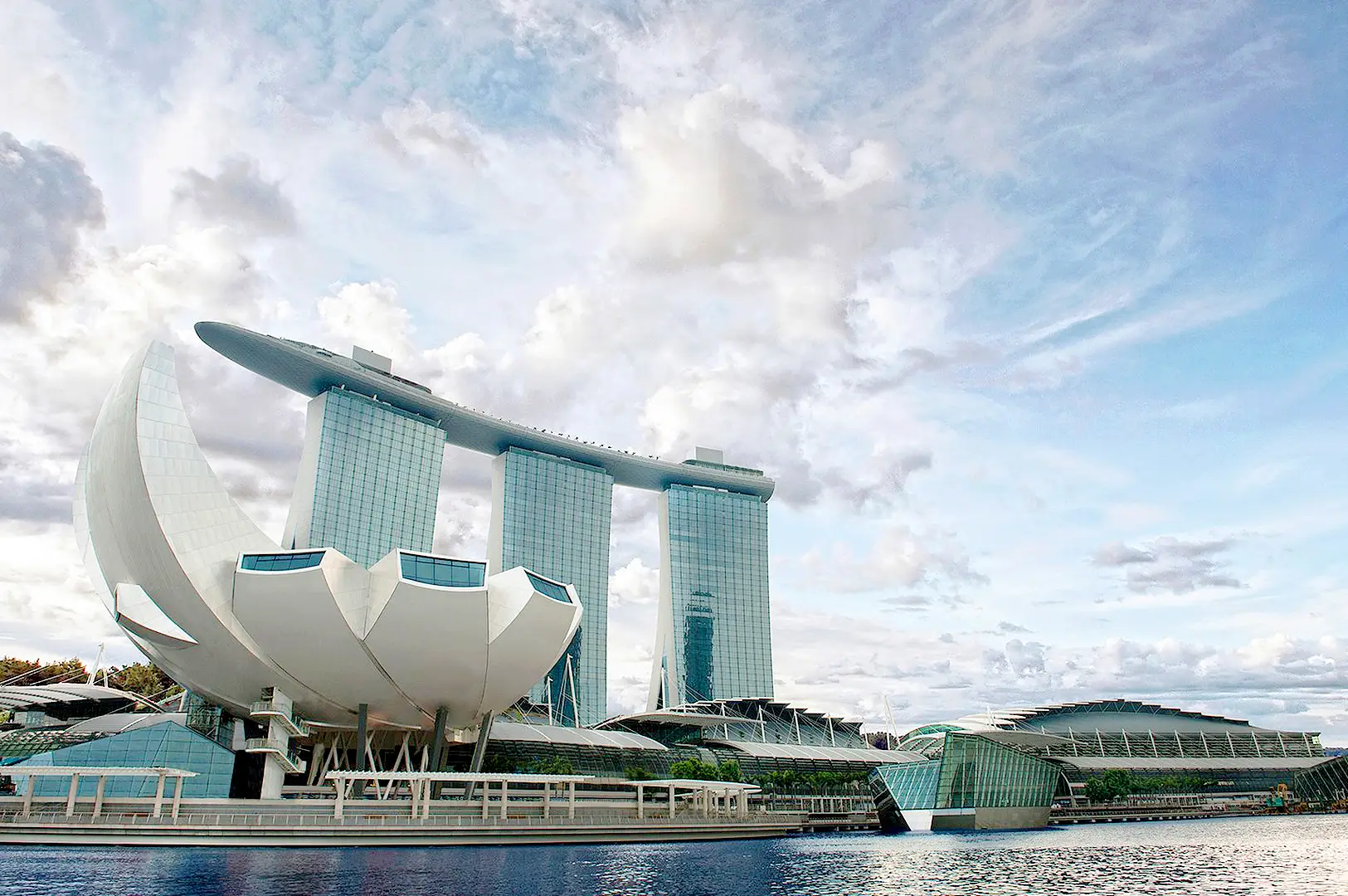
On a clear afternoon, Marina Bay's architecture draws attention through its sharp outlines. The towers stand distinctly against the sky, while the white curves of the ArtScience Museum appear almost sculptural beside the water.
Under heavy clouds, those familiar forms become quieter.
The contrast between glass, concrete and sky begins to fade. Buildings that usually command attention seem to withdraw into their surroundings.
I find this especially noticeable from the promenade beside Marina Bay Sands.
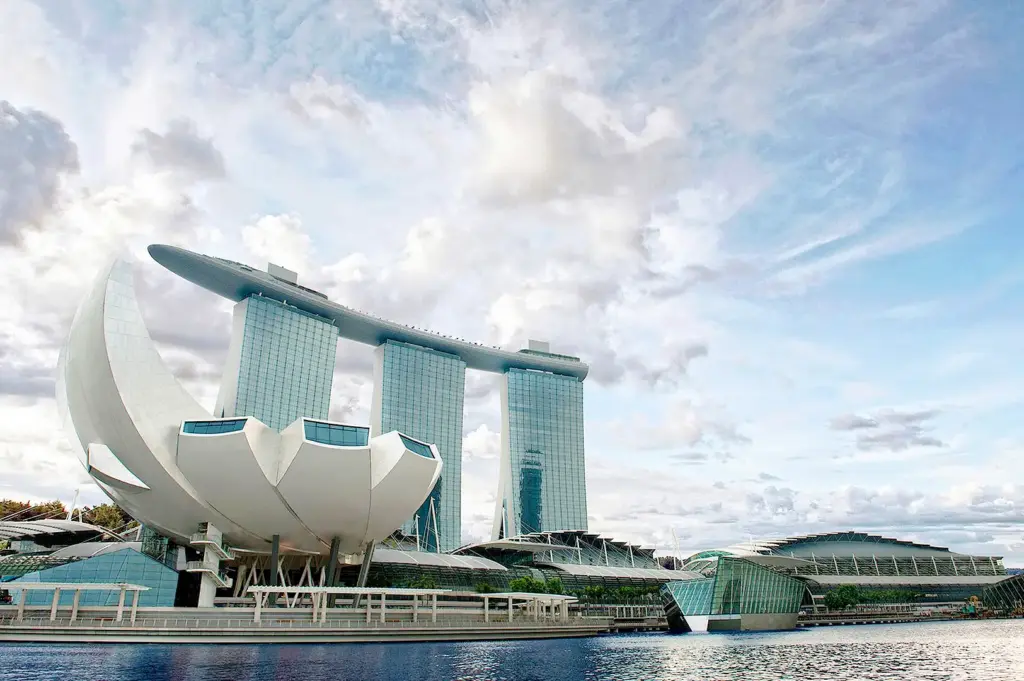
The museum's lotus-inspired structure sits against the changing sky, its pale surfaces responding differently as the clouds move overhead. One moment, the building appears almost white. Minutes later, it takes on the cooler tones of the approaching rain.
Nothing about the architecture has changed.
Only the light has altered how we understand it.
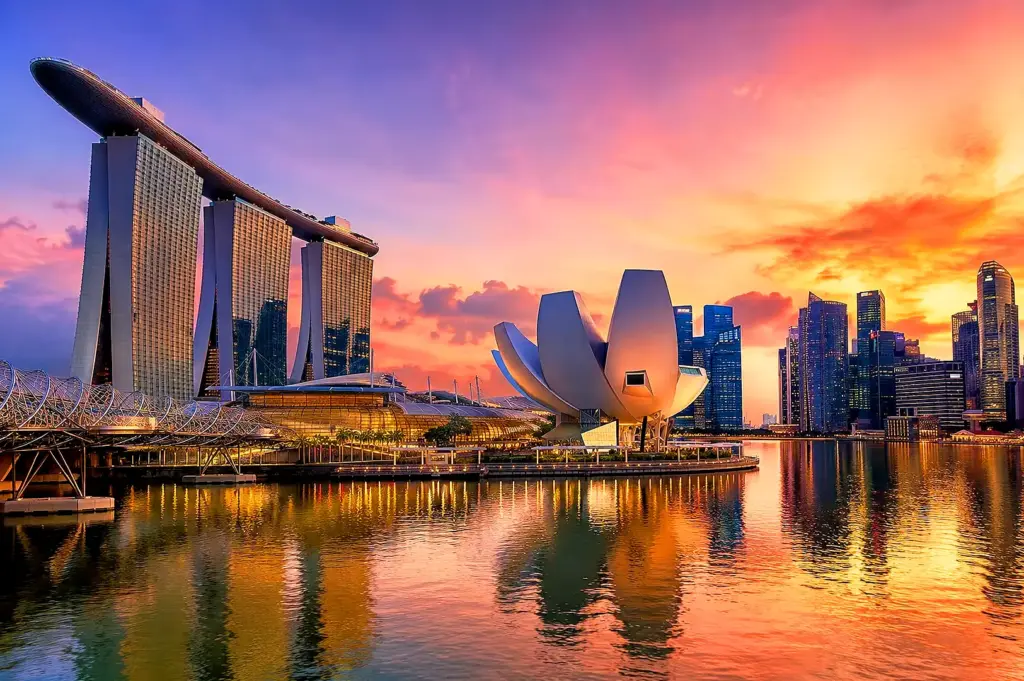
Along the waterfront, reflections become less predictable. The smooth images of buildings that sometimes stretch across calmer water break into scattered fragments. Raindrops interrupt the surface before the outlines can settle.
The pavement offers another kind of reflection.
As the rain begins to ease, shallow patches of water gather along the promenade. The surrounding towers appear briefly beneath people's feet, distorted by uneven paving and passing footsteps.
It is an unusual perspective on a skyline normally experienced by looking upwards.
There is something quietly revealing about seeing those buildings reflected in such ordinary places.
The rain also changes how people occupy the waterfront.
Where the promenade previously encouraged continuous movement, covered spaces become temporary gathering points. Strangers stand a short distance apart, checking the sky or watching boats cross the water.
Conversations become easier to hear beneath the steady sound of rain. Footsteps slow as people approach the wetter sections of the path.
For a little while, the city seems less concerned with moving forward.
Then the brightness begins returning.
The first noticeable change is often across the water, where the buildings of the financial district gradually recover their outlines. Individual windows become distinguishable again. The sky remains cloudy, but the separation between architecture and atmosphere grows clearer.
There may be no dramatic opening in the clouds, only a gradual increase in daylight.
Yet the difference feels considerable.
The wet promenade catches this returning brightness in narrow reflections. Glass surfaces recover their sharper appearance, while the water continues carrying the evidence of passing rain.
By then, people have begun walking again.
Across the bay, the skyline looks familiar, though the afternoon has left something different behind.
In a shallow pool beside the promenade, a fragment of the city remains upside down, held there only until the water dries.